10 Signs Your Cat Is Sick — And What Each One Means (2026 Guide)
10 Signs Your Cat Is Sick — And What Each One Is Trying to Tell You
Table of Contents
Quick note from our team: This guide is for informational purposes only. If your cat is showing any of the signs below, please consult a licensed veterinarian. Early action can make a life-saving difference.
There’s something cats are genuinely brilliant at — hiding how they feel. It’s not that they’re being dramatic or secretive on purpose. Hiding illness is actually a deep-rooted survival instinct carried down from their wild ancestors. In the wild, showing weakness invites danger. So your perfectly groomed, purring house cat has inherited that same poker face.
The problem? That instinct works against them when they need your help most. As a pet parent, learning to spot the early signs your cat is sick could genuinely save their life. Many of the most serious feline conditions — kidney disease, hyperthyroidism, diabetes — are highly manageable when caught early. Miss them, and the outcome changes dramatically.
So let’s walk through the 10 most important warning signs, including some subtle ones that even experienced cat owners tend to overlook.
Top 10 Signs Your Cat Is Sick and Needs Attention
1. Changes in eating habits
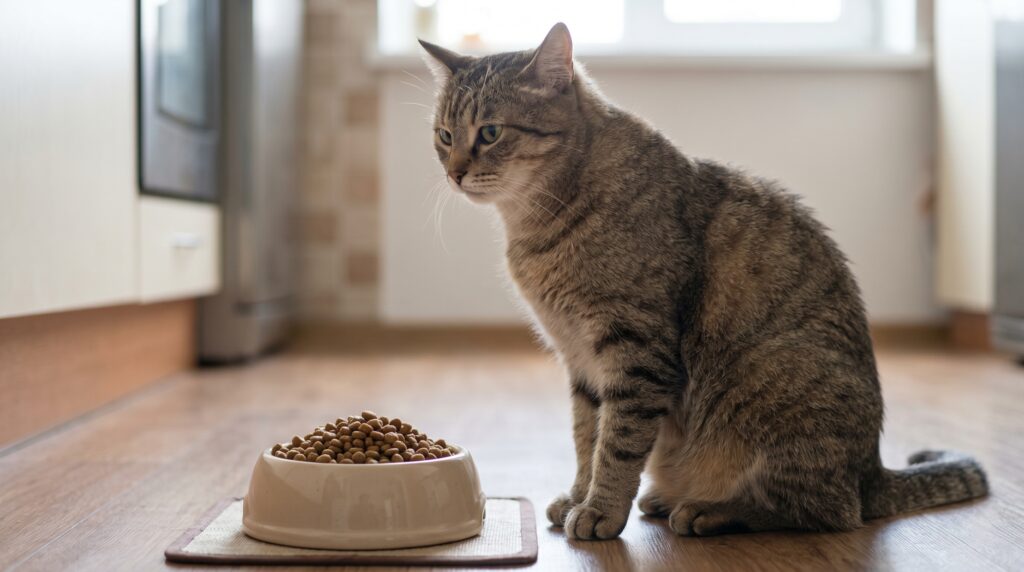
A cat who suddenly stops eating — or starts eating dramatically more — is almost always signaling something. Appetite changes are one of the first signs your cat is sick or isn’t feeling right, and they can point to a surprisingly wide range of conditions.
What to watch for:
- Skipping meals for more than 24–48 hours
- Eating noticeably less than usual over several days
- Sudden increase in hunger despite no change in routine
- Showing interest in food but then walking away
A cat who’s eating less might be dealing with nausea, a painful dental problem, or an underlying illness. On the other side, a cat who can’t seem to get enough food might be showing early signs of diabetes or hyperthyroidism. Either way, a change lasting more than two days deserves a call to your vet.
2. Unusual lethargy or low energy
Yes, cats sleep a lot. We know that. But there’s a clear difference between a cat who’s having a lazy afternoon and one who simply can’t muster energy for anything.
If your cat is spending far more time sleeping than usual, refusing to play, or seems disinterested in things that normally excite them — like the sound of a treat bag or a feather toy — that shift in energy is worth paying attention to. Lethargy on its own isn’t always a crisis, but it is one of the common signs your cat is sick internally.
3. Changes in litter box behavior
Your cat’s litter box tells a story. It might not be the most glamorous part of cat ownership, but checking it regularly is genuinely one of the best ways to catch health problems early.
Red flags to look out for:
- Going outside the litter box when they never used to
- Straining to urinate or producing very little
- Blood in the urine or stool
- Unusually watery stool lasting more than a day
- Crying or vocalizing while using the box
Straining to urinate — especially in male cats — is a genuine emergency. Urinary blockages can become fatal within 24 to 48 hours if untreated. Don’t wait on this one.
4. Vomiting more than occasionally
Cats vomit sometimes. The occasional hairball or grass-induced regurgitation is part of the territory. But frequent vomiting — more than once or twice a week — is not something to brush off as normal.
Repeated vomiting can indicate everything from food intolerance to inflammatory bowel disease, or something more serious like a toxic ingestion or intestinal blockage. If you notice these signs your cat is sick alongside blood in the vomit, move it into urgent territory.
5. Rapid or unexplained weight loss
This one often sneaks up on owners, especially with longer-haired cats where body shape is harder to see under all that fur. Getting into the habit of gently feeling your cat’s ribs and spine once a month is one of the smartest things you can do. You should be able to feel the ribs with light pressure — but not see them. If they’re becoming prominent, your cat has likely lost a meaningful amount of weight.
Unexplained weight loss in cats is associated with hyperthyroidism, diabetes, kidney disease, and cancer. It’s rarely caused by nothing, which is exactly why it needs veterinary attention.
6. Hiding more than usual
Cats hide when they feel vulnerable. If your sociable cat suddenly wants nothing to do with the world and has taken up residence under the bed or in the back of the closet — particularly if this behavior lasts more than a day or two — consider it a message. It could be stress, pain, or severe nausea. Regardless, hiding is one of the classic behavioral signs your cat is sick and needs a professional look.
How Physical Habits Reveal Signs Your Cat Is Sick
7. Coat and grooming changes
A healthy cat is a well-groomed cat. They spend a significant chunk of their day maintaining their coat, and for good reason — a sleek, clean coat is a reflection of how they feel overall.
What to look for:
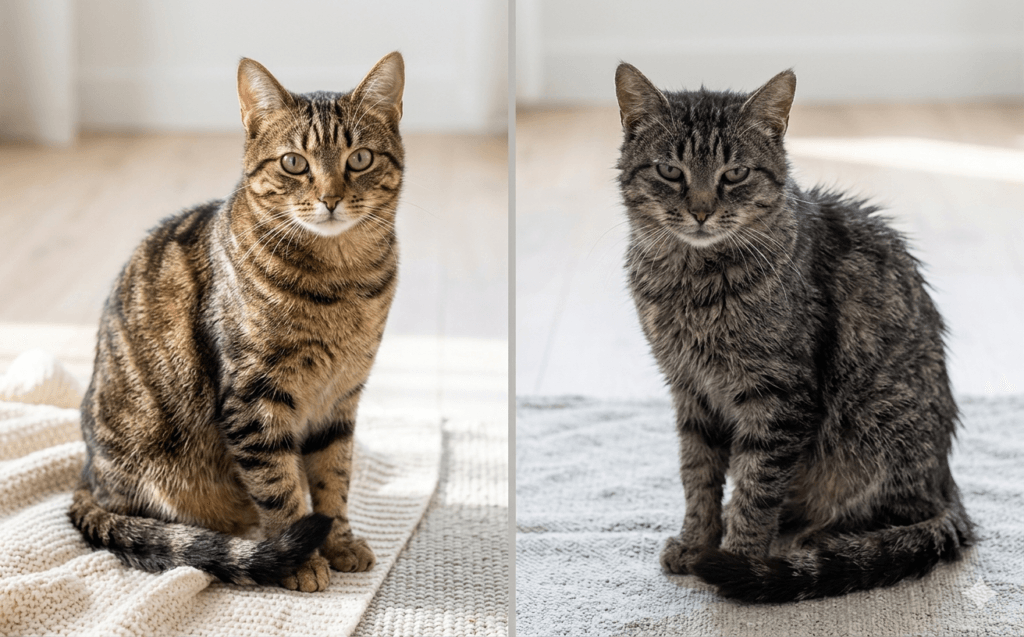
- Dull, matted, or unkempt fur that used to be well-maintained
- Excessive grooming or hair loss in specific areas
- Skin appearing flaky, greasy, or irritated
- The cat struggling or refusing to groom their back end
When cats feel sick or are in pain, grooming is often the first behavior to decline. Older cats with arthritis may stop grooming their lower back simply because it hurts to twist around. Skin and coat changes can also indicate allergies, parasites, or nutritional deficiencies.
8. Changes in breathing
Healthy cats breathe quietly and comfortably. You shouldn’t really notice their breathing under normal circumstances. So if your cat is breathing faster than usual, breathing with an open mouth, or making any kind of wheezing or labored sound — treat it as urgent.
Open-mouth breathing in cats is almost never normal. Unlike dogs who pant to cool down, cats typically only breathe through the mouth when they’re seriously stressed or struggling to get enough oxygen. This symptom requires immediate veterinary attention.
9. Increased thirst and urination
Noticing your cat draining the water bowl or making significantly more trips to the litter box? These are two of the most recognizable early signs your cat is sick with either feline diabetes or chronic kidney disease — two of the most common conditions in middle-aged and senior cats.
The tricky part is that these symptoms develop gradually, so they can be easy to normalize over time. If you’ve noticed your cat drinking more than they used to, even slightly, bring it up at your next vet visit. Blood and urine tests can identify both conditions early when they’re still very manageable.
10. Behavior or personality changes
You know your cat better than anyone. And when something feels “off” — even if you can’t immediately put your finger on what it is — trust that instinct.
Cats in pain or feeling unwell often become more irritable, withdrawn, or clingy than usual. A normally independent cat who suddenly won’t leave your side, or a usually affectionate one who snaps when touched, may be communicating discomfort in the only language available to them. Neurological issues, pain, hormonal changes, and cognitive decline in older cats can all drive sudden personality shifts.
Quick Comparison — Normal vs Concerning Cat Behavior
- Sleeping: Normal range is 12–16 hours per day. Worry if it’s 18+ hours and they won’t engage with anything.
- Eating: Normal range is a consistent daily appetite. Worry if they are missing meals for 24–48 hours or more.
- Vomiting: Normal range is occasionally (hairballs). Worry if it happens more than 1–2 times per week.
- Litter box use: Normal range is 1–3 times per day. Worry if there is straining, blood, or sudden accidents.
- Drinking water: Normal range is steady and consistent. Worry if it’s noticeably increased over days or weeks.
- Coat condition: Normal range is clean, glossy, and well-kept. Worry if it looks matted, dull, patchy, or unkempt.
- Hiding: Normal range is occasional quiet time. Worry if there is persistent hiding for more than 2 days.
When to go to the emergency vet
Some symptoms cannot wait for a scheduled appointment. Head straight to an emergency clinic if your cat is experiencing:
- Open-mouth breathing or gasping
- Complete inability to urinate (especially male cats)
- Seizures or sudden collapse
- Suspected poisoning or toxic ingestion
- Uncontrolled bleeding
- Signs of extreme pain — crying, inability to move
How often should you take your cat to the vet?
Even when your cat seems perfectly fine, regular check-ups are one of the smartest investments you can make in their long-term health. Vets recommend:
- Once a year for cats under 7
- Every 6 months for cats aged 7 and above
- Immediately if any of the warning signs your cat is sick appear
Senior cats age much faster than we do. A year between check-ups at age 12 is the equivalent of skipping several years of check-ups in human terms. Twice-yearly visits give your vet a chance to catch changes in bloodwork and weight before they become emergencies.
Frequently asked questions
How do I know if my cat is sick or just tired?
A tired cat will still show interest in food, play, or human interaction when approached. A sick cat tends to stay withdrawn regardless of what you offer. If your cat hasn’t engaged with anything for more than 24 hours, it’s worth monitoring closely — and calling your vet if it continues.
Do cats hide pain well?
Yes — exceptionally well. Cats are instinctive prey-hiders, meaning they’re hardwired to conceal vulnerability. This makes subtle behavioral shifts far more reliable early indicators than obvious distress signals.
What are the first signs of kidney disease in cats?
Early kidney disease in cats often presents as increased thirst, more frequent urination, gradual weight loss, and reduced appetite. These signs can be easy to miss because they develop slowly. Regular bloodwork is the most reliable way to catch kidney disease in its early stages.
Can stress make a cat show sickness symptoms?
Absolutely. Stress can trigger real physical symptoms in cats — including vomiting, diarrhea, over-grooming, and appetite loss. Common triggers include moving, new pets, construction noise, or changes in household routine. If stress is the likely cause, your vet can recommend management strategies.
At what age do cats start getting sick more often?
Most cats are considered senior at 7 years old, and geriatric at 11+. The risk of conditions like hyperthyroidism, kidney disease, arthritis, and dental disease increases significantly after age 7. This is why twice-yearly vet visits are especially important for older cats.
Final Thoughts
Cats are private creatures. They won’t ask for help, and they certainly won’t tell you something’s wrong. That’s why paying attention to subtle changes in their daily routine — how they eat, sleep, move, groom, and interact — is one of the most loving things you can do as their owner.
Understanding the clear signs your cat is sick gives you the power to act fast and keep your furry best friend safe. If your cat is showing any of the symptoms covered here, don’t wait and hope it passes. A quick call to your vet costs nothing, and it could make all the difference for the cat curled up in your lap right now.
Found this helpful? Share it with a fellow cat owner — it might help them catch something important before it’s too late. And explore our cat health section for more guides just like this one.