How to Groom a Dog at Home: Easy Complete Guide 2026
How to Groom a Dog at Home: The Easy Complete Guide 2026
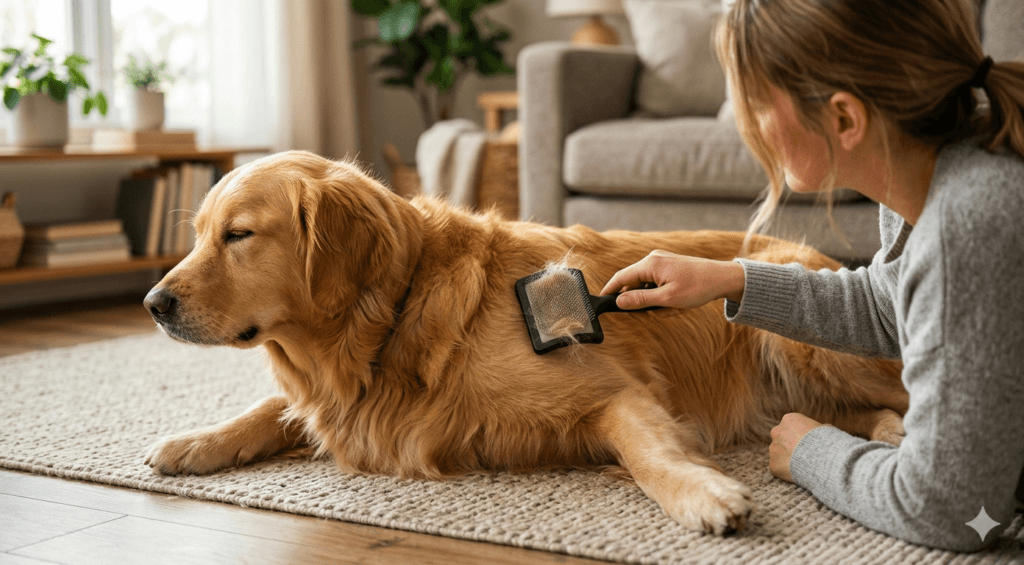
Table of Contents
Note: This guide covers at-home grooming for healthy dogs. For dogs with skin conditions, severe matting, or anxiety during grooming, consult your vet or a certified groomer before starting.
If the idea of grooming a dog at home sounds intimidating, you’re not alone. Most owners assume it’s a job for professionals only — but the truth is, you can absolutely learn how to groom a dog at home, and once you get the hang of it, it’s genuinely one of the best things you can do for your dog’s health. Regular grooming keeps their coat, skin, nails, and ears in good shape, and it saves you a noticeable amount of money over a year.
Whether you have a fluffy Golden Retriever or a short-coated Beagle, the core method for how to groom a dog at home is the same across breeds. The tools differ a little, the frequency changes by breed, but the approach — calm, consistent, reward-based — stays constant. In this guide, you’ll learn everything you need to start grooming your dog at home with confidence.
In this guide, you’ll learn:
- Why grooming your dog at home matters beyond just looks
- The exact tools you need for every coat type
- A step-by-step method to groom a dog at home without stress or struggle
- How often each grooming task should happen by breed type
- The most common mistakes that make dogs dread bath time
1. Why You Should Learn How to Groom a Dog at Home
Professional groomers do fantastic work, but the average grooming session costs between $50 and $100 depending on your dog’s size and coat — and most dogs need it every 6 to 8 weeks. That’s up to $800 a year just for grooming. Learning how to groom a dog at home doesn’t mean you’ll never see a professional groomer again, but it significantly reduces how often you need to.
Grooming is also a health check
Every time you groom your dog at home, you’re doing a hands-on body inspection. You’ll notice lumps, skin changes, ear odor, or nail problems far earlier than you would otherwise. A lot of conditions that become expensive vet visits are caught first during a grooming session. Think of it as preventive care, not just cosmetics. Every owner who learns how to groom a dog at home becomes a better observer of their dog’s health.
It strengthens your bond
Dogs handled regularly when you groom a dog at home tend to be calmer at the vet, more comfortable with children, and less reactive overall. Knowing how to groom a dog at home is genuinely a behavioral investment, not just a grooming one. The more often you work through a calm grooming routine with your dog, the more they associate being touched with something positive. That’s a real behavioral benefit, not just a nice idea.
2. Essential Tools for How to Groom a Dog at Home
Using the right tools is half the battle when learning how to groom a dog at home. The wrong brush on the wrong coat makes the experience uncomfortable for the dog and frustrating for you.
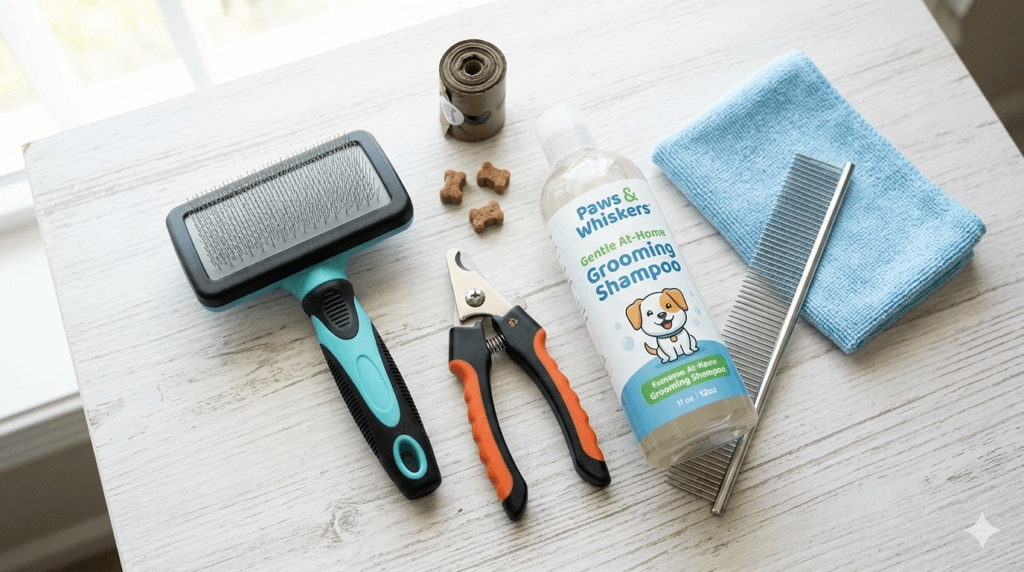
Brushes by coat type
- Slicker brush: the go-to for most medium and longhaired dogs — removes loose fur, light tangles, and debris effectively.
- Deshedding tool (Furminator-style): reaches the dense undercoat on double-coated breeds like Huskies, Labs, and German Shepherds. Use 1-2 times weekly max to avoid irritating the skin.
- Pin brush: better for silky-coated breeds like Yorkshire Terriers — gentler and less likely to split fine hair.
- Rubber curry brush or grooming mitt: ideal for shorthaired dogs like Boxers and Beagles — feels like a massage and removes dead fur at the same time.
Other essential tools
- Dog-specific nail clippers (guillotine or scissor style) plus styptic powder for accidents.
- Dog shampoo and conditioner — never use human products, they disrupt a dog’s skin pH.
- Ear cleaning solution and cotton balls — never use cotton swabs inside the ear canal.
- Slicker brush, fine-tooth metal comb, and a mat splitter for longhaired breeds.
3. How to Groom a Dog at Home: Complete Step-by-Step Method
The key to successfully learning how to groom a dog at home is doing it in a consistent order, keeping sessions short at first, and rewarding often. Here’s the sequence that works.
Step 1 — Brush first, always
The first rule when learning how to groom a dog at home: brush the coat completely dry before any water touches it. Brushing a wet coat tightens mats and makes them much harder to remove later. Start at the head, work toward the tail, and always brush in the direction of hair growth. For longhaired dogs, work in sections and use a fine-tooth comb to check for any mats you’ve missed after brushing.
Step 2 — Bath time
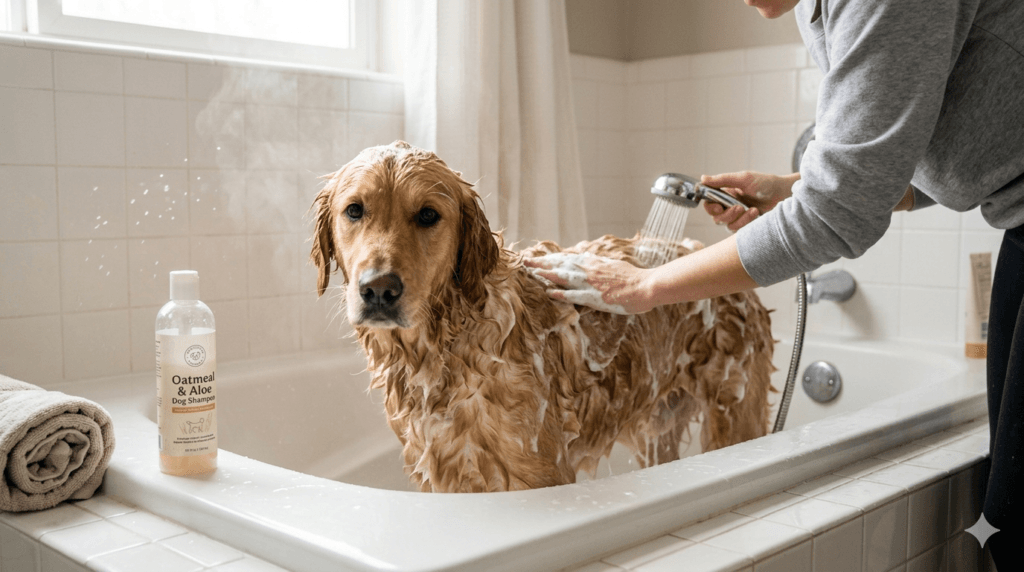
When you know how to groom a dog at home properly, bath time starts with wetting the coat thoroughly with lukewarm water before applying any shampoo — dry fur repels product. Apply dog shampoo and lather from neck to tail, avoiding eyes and ears. Rinse completely — leftover shampoo causes itchy skin. Conditioner is optional for shorthaired dogs but genuinely helpful for longhaired breeds that tend to tangle after drying.
[IMAGE HERE – Filename: bathing-dog-at-home-step-by-step.jpg | Alt Text: Bathing a dog at home — dog in tub being washed with dog shampoo]
Step 3 — Drying
Part of knowing how to groom a dog at home well is the drying step — towel dry first, then use a low-heat blow dryer if your dog treats it well, keeping it moving constantly rather than holding it in one spot. Many dogs prefer air-drying in a warm room, which works fine for most coat types. Brush again while drying to prevent new mats forming as the coat dries and shrinks.
Step 4 — Nail trimming
Press the paw pad firmly to extend each nail. Nail trimming is the step that intimidates most people learning how to groom a dog at home, but it gets easy fast. You’ll see a clear or white outer portion and a pink quick (blood vessel) further back. Cut only the clear tip, well away from the quick.
If your dog has dark nails where the quick isn’t visible, trim tiny slices and look for a dark center circle to appear — that’s when you’re getting close and should stop. If you cut the quick, apply styptic powder immediately and hold it in place for 30 seconds.
Step 5 — Ear cleaning
When you groom a dog at home, a small amount of light brown wax in the ears is normal. Apply ear cleaning solution to a cotton ball and wipe only the visible outer area of the ear. Never push anything into the ear canal. Floppy-eared breeds like Cocker Spaniels and Basset Hounds need more frequent ear checks because their ears trap moisture and are more prone to infection.
4. How Often to Groom a Dog at Home by Breed Type
One of the most common mistakes people make when they groom a dog at home is applying the same schedule to every dog. Breed and coat type completely change how often each task is needed.
| Coat type / Breed example | Brushing | Bathing | Nail trim | Ear check |
|---|---|---|---|---|
| Shorthaired (Beagle, Boxer) | 1-2x per week | Every 6-8 weeks | Every 3-4 weeks | Monthly |
| Medium (Labrador, Golden) | 3-4x per week | Every 4-6 weeks | Every 2-3 weeks | Monthly |
| Double coat (Husky, Malamute) | Daily during shedding | Every 6-8 weeks | Every 2-3 weeks | Monthly |
| Longhaired (Maltese, Shih Tzu) | Daily | Every 3-4 weeks | Every 2 weeks | Every 2 weeks |
| Curly/Wavy (Poodle, Doodle) | Daily | Every 4-6 weeks | Every 2 weeks | Weekly |
5. How to Groom a Dog at Home Without Stress: Keeping Your Dog Calm
Honestly, this is the part that makes or breaks how to groom a dog at home successfully. A dog who associates at-home grooming with treats and calmness will stand still and cooperate. A dog who was forced through it once or twice will fight it every time from then on. Patience in the early sessions pays off enormously later.
Start slow — even if your dog is an adult
When you first start learning how to groom a dog at home, you don’t need to complete a full session on day one. Put the brush on the floor and let your dog sniff it. Touch it to their back for 3 seconds, then give a treat and stop. Repeat for a few days before you attempt any real brushing. This investment of time in the first week removes resistance for years to come.
The best time to groom a dog at home is after exercise
The best time to groom a dog at home is right after exercise, not before. Knowing how to groom a dog at home means timing matters too. A dog who just got back from a walk is calmer, less reactive, and far more likely to stand still for 15 minutes. Grooming before a walk, when energy is high, is asking for trouble. Feed a meal first when possible — a full, tired dog is genuinely your best grooming partner.
Tools that make it easier
- Licki mats: spread with peanut butter or wet food keep the dog occupied and mouth-busy during nail trims.
- Non-slip grooming mat: helps the dog feel stable and reduces the urge to shuffle and move.
- Adaptil (DAP) diffuser or spray: using this in the grooming area reduces stress hormones in anxious dogs.
| Common home grooming mistake | What happens | Fix |
|---|---|---|
| Bathing before brushing | Mats tighten in wet fur, become impossible to remove | Always brush completely dry before any water |
| Using human shampoo | Skin pH disruption, dryness, itching | Dog-formulated shampoo only, always |
| Trimming too close to the quick | Bleeding, pain, future nail-trim resistance | Tiny increments on dark nails; stop at dark center |
| Forcing a stressed dog to continue | Fear association, lasting resistance, possible bite | End on a calm note before resistance peaks |
| Skipping ear checks | Infections develop unnoticed until painful | Quick check every grooming session |
FAQ: More Tips on How to Groom a Dog at Home
How often should I groom my dog at home?
It depends on the coat. The schedule for how to groom a dog at home changes by breed — shorthaired dogs need brushing once or twice a week and baths every 6-8 weeks. Longhaired and curly-coated dogs need daily brushing and baths every 3-4 weeks. All dogs benefit from nail trims every 2-4 weeks regardless of coat type. When you groom a dog at home regularly, each session gets shorter because buildup never gets out of hand.
How do I groom a dog at home if they hate being touched?
The real answer to how to groom a dog at home when they resist is to start with desensitization before you try to groom anything. Touch-treat-repeat in tiny increments over several days. The goal at first is just for the dog to associate the brush or clippers with good things. Never restrain a panicking dog — it makes the association far worse. A fear-free certified trainer can help if you’re stuck.
Can I use human shampoo or baby shampoo on my dog?
No. Human skin sits at a different pH than dog skin, and shampoos formulated for humans — including baby shampoo — strip the natural oils that protect a dog’s coat. Repeated use causes dry, flaky, itchy skin. Always use a shampoo specifically made for dogs when you groom your dog at home.
What do I do if I cut my dog’s nail too short and it bleeds?
It’s a common slip when learning how to groom a dog at home — apply styptic powder directly to the nail tip and hold gentle pressure for 30 seconds. If you don’t have styptic powder, cornstarch works in a pinch. The bleeding usually stops within a minute. Keep the dog calm and off hard floors for a few minutes.
Do I still need a professional groomer if I groom my dog at home?
For most breeds, a professional groomer every 3-4 months handles the tasks that are genuinely difficult at home — breed-specific haircuts, scissoring around the face, and hand-stripping for terriers. Regularly grooming your dog at home between those sessions keeps the cost down and keeps your dog comfortable in between appointments.
More helpful reads: Now that you know how to groom a dog at home, watch for anything unusual on your dog’s skin. Every time you groom a dog at home is also a mini health check on your dog’s skin during each session, check our guide on signs your pet is unwell — many symptoms apply across species. Getting the nutrition right matters too — our best dog food for small breeds guide helps you set your dog up for a healthy coat from the inside out.