How to Groom a Cat at Home: Easy Complete Guide 2026
How to Groom a Cat at Home: Step-by-Step Method That Works
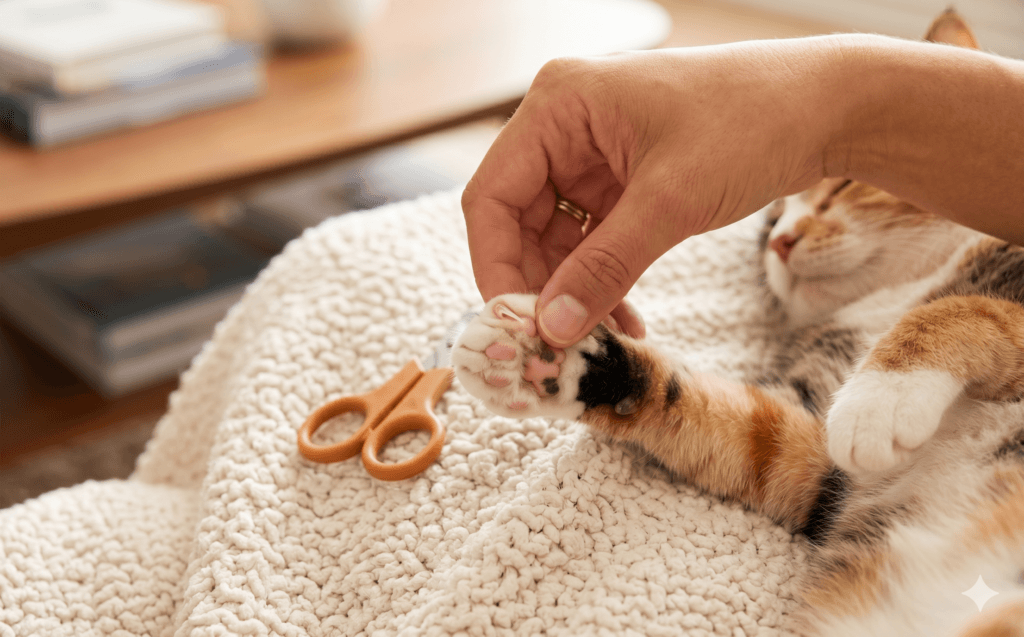
Table of Contents
Note: This guide covers general at-home grooming for healthy cats. If your cat has skin conditions, matting that won’t brush out, or shows signs of discomfort during grooming, consult your vet or a professional groomer.
If you’ve ever tried to groom a cat at home and ended up with scratch marks, a traumatized pet, and fur on every surface you own, you’re not alone. Most cat owners assume their cats handle all grooming themselves — and while cats are famously self-cleaning, that doesn’t mean they don’t need your help. Learning how to groom a cat at home properly saves money, strengthens your bond, and catches health issues early that you’d otherwise miss.
In this guide, you’ll learn:
- Why regular grooming matters even for shorthaired cats
- The right tools for brushing, bathing, nail trimming, and ear cleaning
- Step-by-step grooming techniques that actually keep your cat calm
- How often each grooming task needs to happen by coat type
- Common mistakes that make cats hate being groomed
1. The Importance of Knowing How to Groom a Cat at Home
Cats spend a huge chunk of their waking hours grooming themselves, so it’s easy to assume they’ve got it covered. But there are things a cat simply can’t do on their own, and ignoring them leads to real problems down the line.
What self-grooming doesn’t cover
Cats can lick their fur, but they can’t detangle mats, clean their ears properly, trim their own nails, or remove heavy shedding from their undercoat. Long-haired breeds like Maine Coons and Persians can develop painful mats within weeks if nobody helps them out.
Also, grooming sessions are one of the best chances you’ll get to check your cat’s body for lumps, skin irritation, fleas, or anything else that needs a vet’s attention. When you master how to groom a cat at home, you’re performing a vital mini health check every single time.
Hairballs are a grooming problem, not just a nuisance
Here’s something that surprises most people: regular brushing significantly reduces hairballs. When you remove loose fur before your cat swallows it, there’s less to form a ball in their digestive tract. If your cat is producing hairballs more than once or twice a month, more frequent brushing is the first fix to try.
2. The Grooming Tools Every Cat Owner Needs
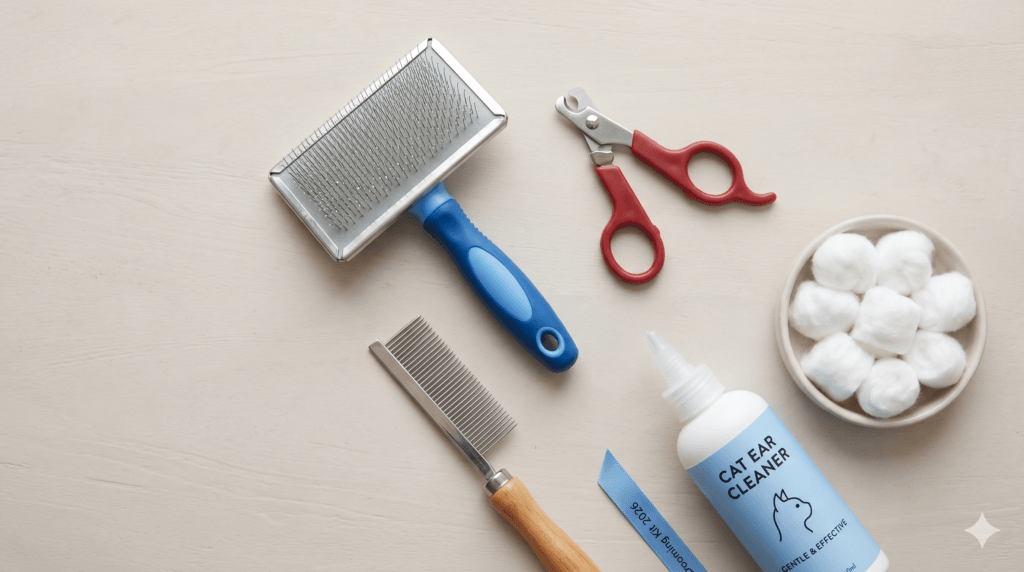
You don’t need a professional kit, but using the wrong tools makes the whole experience harder for both of you. Having the right toolkit makes figuring out how to groom a cat at home significantly easier. A few targeted purchases go a long way.
Brushes and combs
- Slicker brush: Works well on most coat types, especially medium to long hair. Good for removing loose fur and light tangles.
- Deshedding tool: Reaches the undercoat and pulls out shed fur before it ends up on your sofa. Use once or twice a week max — overuse can irritate skin.
- Fine-tooth metal comb: Great for finishing after brushing, checking for flea dirt, and working through fine tangles near the face and ears.
- Rubber grooming mitt: Ideal for shorthaired cats that resist brushes — feels like petting and removes loose fur at the same time.
Nail trimming tools
Cat-specific nail clippers are much easier to use than human nail scissors. The guillotine style or small scissor-style clippers both work well. Get a styptic pencil or powder too — if you accidentally clip the quick (the pink blood vessel inside the nail), it stops bleeding fast.
how to groom a cat at home
Ear and eye cleaning
You’ll need cotton balls and a vet-approved ear cleaning solution. Never use cotton swabs inside the ear canal — that’s a vet job only. For eye discharge (common in flat-faced breeds like Persians), a soft damp cloth is all that’s needed.
3. How to Groom a Cat at Home: A Step-by-Step Guide
The order matters. Start with the least stressful tasks and end with the ones your cat tolerates least. This keeps the session positive for longer.
Step 1 — Brushing (always first)
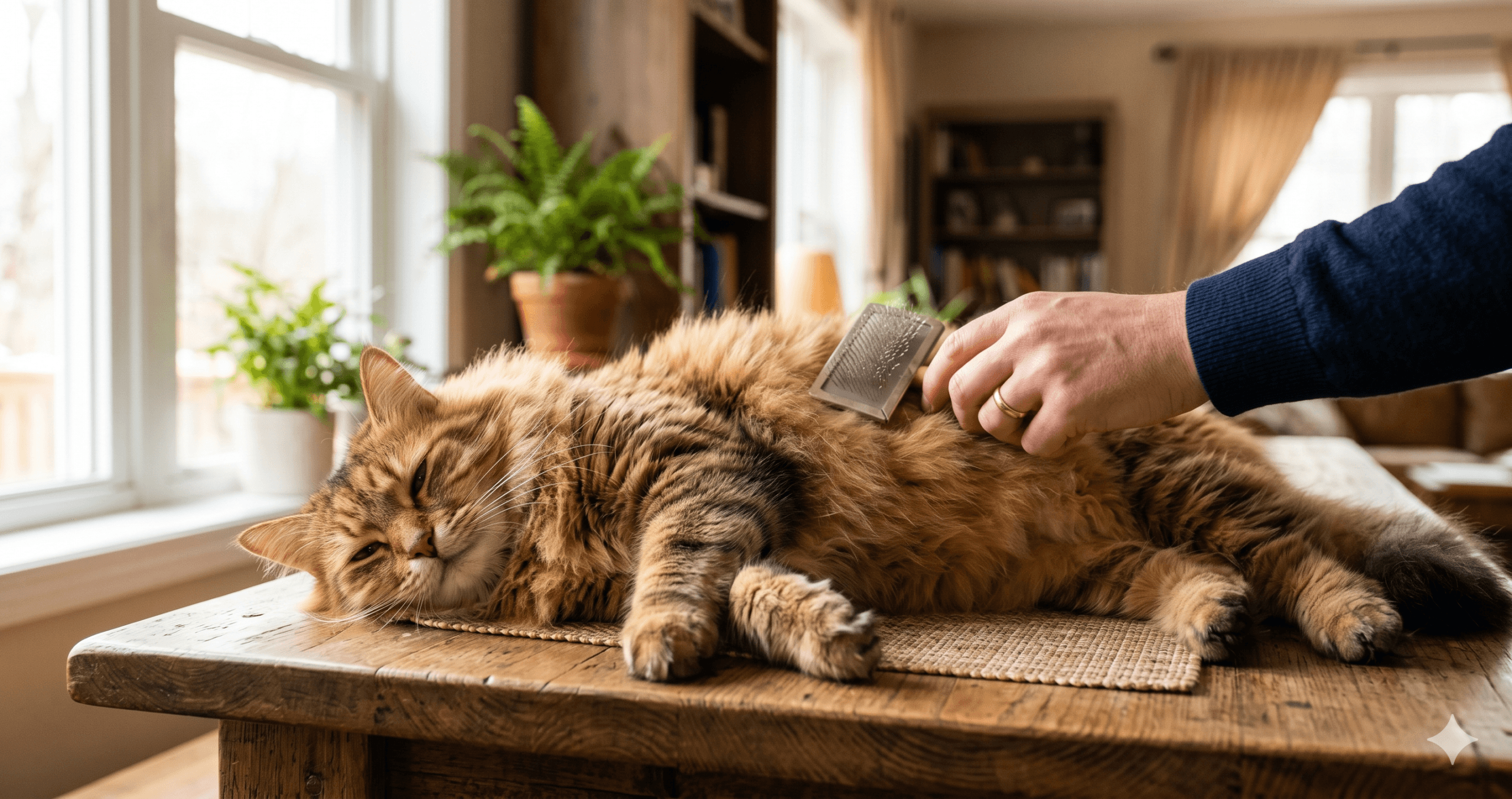
Start at the head and work toward the tail, following the direction of fur growth. Short sessions of 5 to 10 minutes work better than one long one your cat resents. If you hit a mat, don’t pull — work the edges with your fingers first, then a comb, then a mat splitter if needed. Cutting a mat out with scissors is a last resort, and you should point the scissors away from skin at all times.
Step 2 — Nail trimming
Gently press the paw pad to extend the nail. You’ll see a clear or white tip and a pink area (the quick) further back. Cut only the clear tip, well away from the quick. If your cat is very resistant, do one paw per session and spread it across a few days. That’s completely fine — you’re building trust, not racing a clock.
Step 3 — Ear check and cleaning
Healthy cat ears look pink inside with minimal waxy buildup. A small amount of light brown wax is normal. Apply a few drops of ear cleaner to a cotton ball and wipe the visible outer area only. Dark brown or black discharge, a bad smell, or your cat shaking their head constantly are signs of infection — that’s a vet visit, not a home cleaning job.
Step 4 — Bathing (only when needed)
Most cats don’t need regular baths. Exceptions include hairless breeds like Sphynx (who need weekly baths because they have no fur to absorb skin oils), cats who’ve gotten into something sticky or toxic, and very elderly or overweight cats who can’t reach certain spots. When you do bathe a cat, use a cat-formulated shampoo only — human shampoo disrupts their skin’s pH balance. Keep the water lukewarm, protect the ears, and dry with a towel immediately. Most cats strongly prefer not to use a blow dryer.
4. Grooming Frequency by Coat Type
Not every cat needs the same grooming schedule. Brushing a Persian every day is non-negotiable, but doing the same to a shorthaired British Shorthair would be overkill. Here’s a practical breakdown.
| Coat Type | Brushing | Bathing | Nail Trim | Ear Check |
|---|---|---|---|---|
| Shorthaired (e.g., DSH, Siamese) | 1-2x per week | Every 4-6 weeks if needed | Every 2-3 weeks | Monthly |
| Medium-haired (e.g., Maine Coon) | 3-4x per week | Every 4-6 weeks | Every 2-3 weeks | Monthly |
| Longhaired (e.g., Persian, Ragdoll) | Daily | Every 4-6 weeks | Every 2 weeks | Every 2 weeks |
| Hairless (e.g., Sphynx) | N/A | Weekly | Weekly | Weekly |
5. Keeping Your Cat Calm During Grooming: What Actually Works
This is the section most grooming guides skip, which is funny because it’s the one thing that determines whether grooming goes smoothly or turns into a disaster.
Start young, but it’s not too late
Kittens introduced to brushing and handling early accept grooming much more readily as adults. But don’t give up if you have an older cat who’s never been groomed before. Realizing how to groom a cat at home without stress requires patience; go slowly, use high-value treats, and make the first few sessions about just touching the tools near them without doing anything yet.
Timing and environment
Groom after a play session or a meal, when your cat is naturally calmer. A quiet room with no other pets around removes a lot of stress. Some owners find that a rubber grooming mat on the floor lets the cat sit more comfortably than being lifted onto a table. If your cat starts growling or trying to escape, stop. End on a calm note if at all possible, even if that means just giving a treat and putting the brush away.
Tools and products that help
- Feliway spray: Spraying this on the grooming area 15 minutes before starting reduces stress in many cats.
- Licki mats: Spreading a soft treat on a textured mat keeps cats distracted and mouth-busy during nail trims.
- Grooming wipes: Cat-specific wipes work wonders for quick between-session touch-ups.
| Common Grooming Mistake | What It Causes | Better Approach |
|---|---|---|
| Forcing a resistant cat to stay still | Fear, aggression, lasting aversion | Short sessions, stop before resistance peaks |
| Using human shampoo or products | Skin irritation, dryness, chemical exposure | Cat-specific products only |
| Cutting nails without extending the claw | Accidental injury, cutting the quick | Always press pad to extend, clip only the tip |
| Brushing against fur growth direction | Discomfort, skin irritation, cat resistance | Always brush in the direction of fur growth |
| Cleaning inside the ear canal | Ear damage, pushing debris deeper | Outer ear only — inner canal is vet territory |
Frequently Asked Questions
How often should I groom my cat at home?
When establishing how to groom a cat at home, the frequency depends entirely on the coat. A shorthaired cat needs brushing once or twice a week and a nail trim every two to three weeks. A longhaired cat like a Persian needs daily brushing and ear checks every two weeks. The table in Section 4 breaks it down by breed type.
My cat hates being groomed. What should I do?
Start with desensitization — let the cat sniff the brush for a few sessions before you ever use it. Then introduce brief touches with lots of treats. Build up gradually over days or weeks. If the cat panics consistently despite a slow approach, a professional groomer who specializes in anxious cats may be the better option.
Can I use human shampoo on my cat?
No. Human shampoos have a different pH than cat skin requires and can strip their coat’s natural oils, causing dryness and irritation. Use only shampoos specifically formulated for cats. Baby shampoo is sometimes cited as a safe alternative in an emergency, but a proper cat shampoo is always the better choice.
How do I remove mats from my cat’s fur without hurting them?
Work the edges of the mat with your fingers to loosen it first. Then use a metal comb to tease it apart from the tip inward — never from the base outward, which pulls the skin. A mat splitter or seam ripper can help with stubborn mats. If the mat is tight against the skin, leave it for a professional groomer to shave out safely.
Do indoor cats need grooming if they don’t go outside?
Yes. Indoor cats still shed, still develop mats, still need nail trims (arguably more so since outdoor surfaces don’t wear nails down naturally), and still produce earwax. The environment being clean doesn’t change the cat’s biology at all.
More helpful reads: Noticed something unusual during your grooming session? Our guide on signs your cat is sick covers the symptoms worth taking seriously. And if you’re also managing a dog at home, check our guide on best dog food for small breeds to keep every pet in the house thriving.
[…] how to groom a dog at home […]